

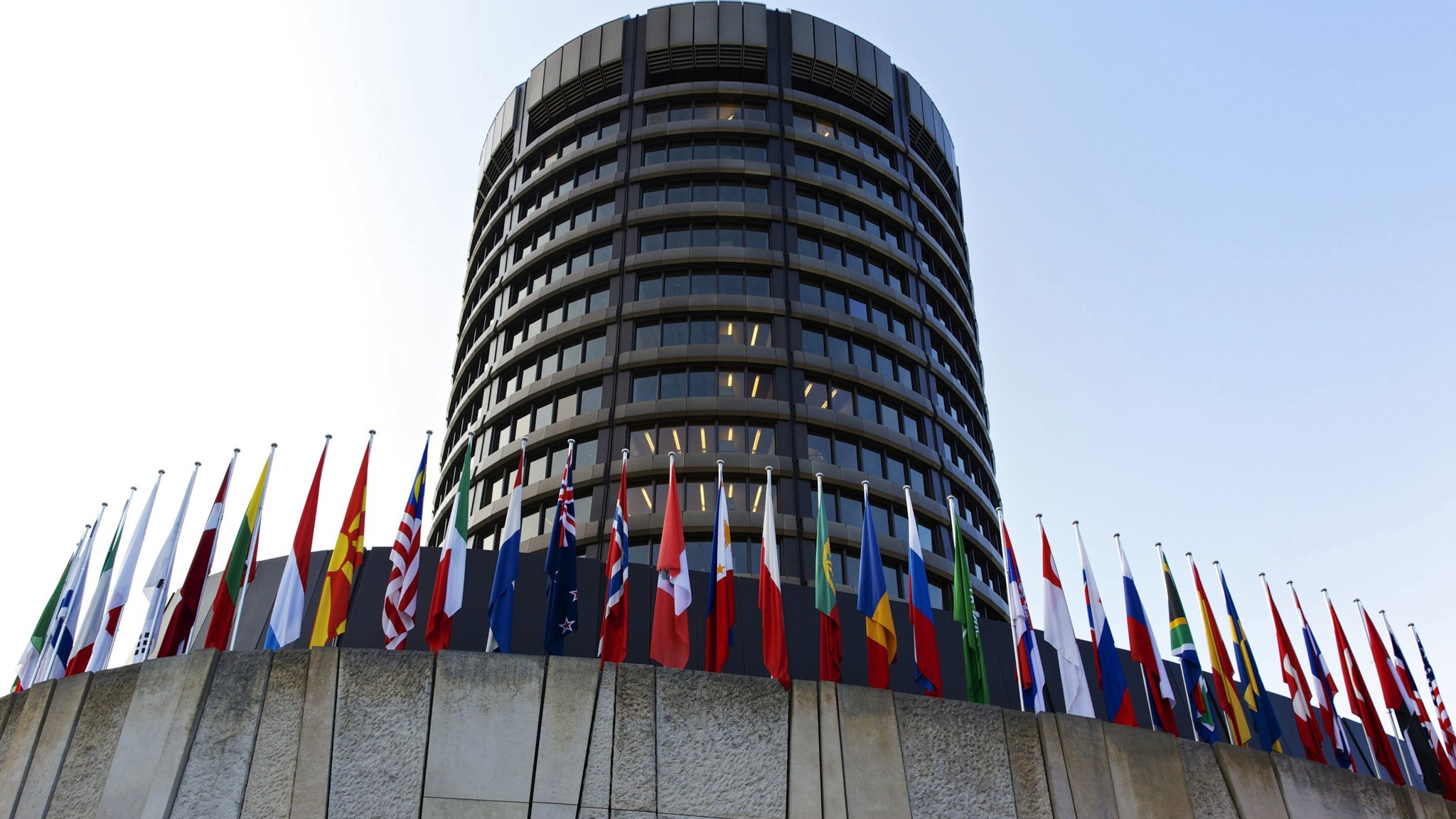
The world’s top banking authority has warned that the rapid growth of stablecoins could begin pulling deposits away from commercial banks, potentially making bank funding more expensive, reducing lending capacity and creating new risks for the financial system as digital assets become increasingly integrated into global finance.
In its 2026 Annual Economic Report, the Bank for International Settlements (BIS), often described as the central bank for the world’s central banks, argues that while tokenization could modernize financial markets, privately issued stablecoins could weaken the traditional banking model if they become widely used for payments and savings. Rather than simply criticizing cryptocurrencies, the report distinguishes between blockchain innovation and the economic consequences of replacing bank deposits with privately issued digital dollars.
The warning arrives as stablecoin adoption accelerates worldwide. According to industry data, the global stablecoin market has grown to well over $250 billion in circulation, with issuers such as Tether and Circle becoming among the largest holders of short-term U.S. Treasury securities. At the same time, regulators across the United States, Europe and Asia are developing legal frameworks aimed at integrating stablecoins into mainstream finance instead of banning them.
Why Stablecoins Could Matter More Than Bitcoin For Banks
The BIS argues that stablecoins present a different challenge than cryptocurrencies such as Bitcoin. While Bitcoin is primarily viewed as a speculative investment, stablecoins increasingly perform functions traditionally carried out by commercial bank deposits. They are used to transfer money, settle digital asset trades, earn yield through decentralized finance applications and increasingly serve as a store of value, particularly in countries experiencing high inflation or currency instability.
The concern is straightforward. Every dollar converted from a commercial bank deposit into a stablecoin is money that no longer sits on a bank’s balance sheet. Banks rely heavily on customer deposits because they represent one of their cheapest and most stable funding sources. Those deposits are then used to finance mortgages, corporate loans, consumer credit and countless other lending activities that support the wider economy.
If stablecoins capture a meaningful share of household and corporate cash balances, banks may need to replace those deposits with more expensive wholesale funding. That increases funding costs, compresses profit margins and could ultimately reduce the amount of credit available to businesses and consumers.
| Traditional Bank Deposits | Stablecoins |
|---|---|
| Fund bank lending | Held outside the banking system |
| Covered by banking regulation | Issuer-dependent regulatory framework |
| Support credit creation | Generally backed by reserve assets |
| Protected by deposit insurance in many jurisdictions | Usually not covered by deposit insurance |
| Generate funding for commercial banks | Can reduce bank deposit bases if widely adopted |
The report notes that this migration could become particularly important if stablecoins evolve beyond crypto trading and become widely used for everyday payments, payroll, remittances and cross-border commerce.
Ironically, many stablecoin issuers invest customer reserves in short-dated U.S. Treasury bills and other highly liquid government securities. This means stablecoins could simultaneously reduce deposits within the banking system while becoming increasingly important buyers of government debt.
Tokenization Receives Support, But Stablecoins Face Criticism
The report makes a distinction that has become increasingly important in policy discussions.
Rather than rejecting blockchain technology altogether, the BIS argues that tokenization has the potential to improve settlement efficiency, reduce operational costs and simplify the movement of financial assets. The institution instead questions whether privately issued stablecoins should become the foundation of the future financial system.
Among its concerns are fragmentation between competing issuers, dependence on reserve management, financial integrity risks associated with digital wallets, and the possibility that widespread migration into stablecoins could weaken monetary sovereignty in countries with less stable domestic currencies.
Those concerns contrast with the growing optimism surrounding stablecoins among many financial institutions. Over the past year, several major banks, payment companies and digital asset firms have announced stablecoin initiatives, while lawmakers in multiple jurisdictions have moved closer to establishing dedicated regulatory frameworks governing issuance and reserve management.
Potential Impact of Large-Scale Stablecoin Adoption
| Area | Potential Effect |
|---|---|
| Commercial banks | Deposit outflows increase funding costs |
| Bank lending | Reduced capacity to extend credit |
| Government bond markets | Higher demand for Treasury securities from stablecoin reserves |
| Cross-border payments | Faster settlement and lower transfer costs |
| Consumers | Greater access to digital dollar payment systems |
The debate is becoming increasingly relevant as governments attempt to balance financial innovation with financial stability. Stablecoins were originally designed to serve cryptocurrency markets, but they are gradually becoming part of mainstream financial infrastructure, forcing central banks and regulators to consider how they fit alongside traditional deposits, payment systems and monetary policy.
FinanceFeeds recently covered Bitcoin Suisse’s MiCAR expansion into Europe, Payward’s latest VASP registrations in the British Virgin Islands, Zero Hash’s institutional staking infrastructure, MoonPay’s acquisition of Entendre to automate stablecoin finance operations, and Interactive Brokers’ expansion of digital asset capabilities, illustrating how regulated financial institutions continue expanding their crypto offerings even as policymakers debate the systemic implications of stablecoin growth.
Takeaway
The BIS is not warning that stablecoins are about to replace banks tomorrow. Instead, it argues that if stablecoins evolve into widely used payment and savings instruments, they could begin competing directly with one of banks’ most valuable resources: customer deposits. That shift could reshape how banks fund lending, influence monetary policy and accelerate the next stage of digital finance, making stablecoins one of the most closely watched sectors in global financial regulation.