

Nvidia has put nearly US$50 billion into the AI labs that buy its chips, and has lined up commitments for more than $500 billion
Colette Kress, the company’s chief financial officer, told analysts on August 26 that demand from the labs Nvidia backs with its own balance sheet will contribute toward roughly a quarter of its business next year.
That arrangement is what people mean by circular financing, and Nvidia used the phrase before any analyst did. Kress said on the earnings call that the company recognised the scale of the support it was providing and knew some would call it circular financing. She said Nvidia sees it differently.
The loop is simple to describe. Nvidia invests in an AI lab. The lab uses the money, or the credit Nvidia’s involvement unlocks, to build a data centre. The data centre is filled with Nvidia chips. The purchase is recorded as Nvidia revenue. Nvidia’s share price and cash pile grow, and it invests again.
What Nvidia has committed
Kress gave the figures herself. She said Nvidia has signed partnerships with six investment firms, naming Apollo Global Management, BlackRock, Blackstone, Brookfield Asset Management, Goldman Sachs and KKR, to set up financing platforms that will raise more than $500 billion of outside capital for the labs to build with.
She said Nvidia secured land, power and building capacity with SB Energy that will host only Nvidia equipment. The first phase supports 4.25 gigawatts and will be used by OpenAI. Kress put OpenAI’s existing and planned commitments at around 12 gigawatts of Nvidia compute through 2030. For a second lab she did not name, Nvidia will provide credit support covering nearly two gigawatts.
Nvidia’s results statement describes those partnerships as subject to definitive agreements, which means the binding contracts have not been signed. The $500 billion is an intention rather than money in place.
Nvidia is also lending its name to smaller cloud operators. Kress said the company promises to rent a portion of an operator’s capacity itself, which gives the operator’s lenders a guaranteed income stream to lend against. In exchange, Nvidia takes a share of what the operator earns above that floor. She said Nvidia gets paid twice under the arrangement, once on the equipment and again on the rental income.
Why Nvidia rejects the circular financing label
Kress gave three answers, and they deserve to be reported alongside the numbers.
Outside lenders still assess every deal on its own merits, she said, and Nvidia is not making loans. The chips Nvidia ships go to customers that are investment grade or backed by someone who is. And if a customer does fail, the equipment can be moved to another buyer, which she offered as the reason Nvidia’s exposure is limited.
Kress also explained why the labs need the help. They have more demand for computing than their finances can support, she said. They are young companies without the long contracts and credit ratings that lenders normally require before funding a data centre. What limits their growth is not customers or technology. It is access to computing.
The obvious risk is what happens if one of them cannot pay. Nvidia would lose the sale and the investment at the same time. Kress answers that the hardware finds another buyer. That claim only holds while demand exceeds supply, and Nvidia says it currently does.
Vivek Arya of BofA Securities asked Jensen Huang how the company squares funding labs that are designing their own chips, pointing to OpenAI’s Jalapeño processor. Huang said Nvidia sells a platform that works in any cloud across the whole life of an AI system, while rival chips are built for one service. On the money, he said his only regret was not investing more and sooner.
The agent assumption underneath it all
Kress told Morgan Stanley’s Joseph Moore that an agent needs somewhere between 15 and 100 times the computing power of a person using the same system. Huang said he believes AI tipped over to being mostly agentic in the past month. Nvidia offered no data for that.
On that basis, the company guided to $108 billion in revenue this quarter and said it preliminarily expects around 70% growth in the year to January 2028, a figure Kress said is limited by supply rather than demand.
Kress separately warned that memory prices are climbing faster than Nvidia expected. She guided margins down to 74% this quarter, bottoming at 71% to 72% in the fourth, and said memory scarcity is being driven in large part by the AI buildout itself.
Nvidia reports again on November 17. Kress did not say which lab is receiving the credit support covering nearly 2 gigawatts.
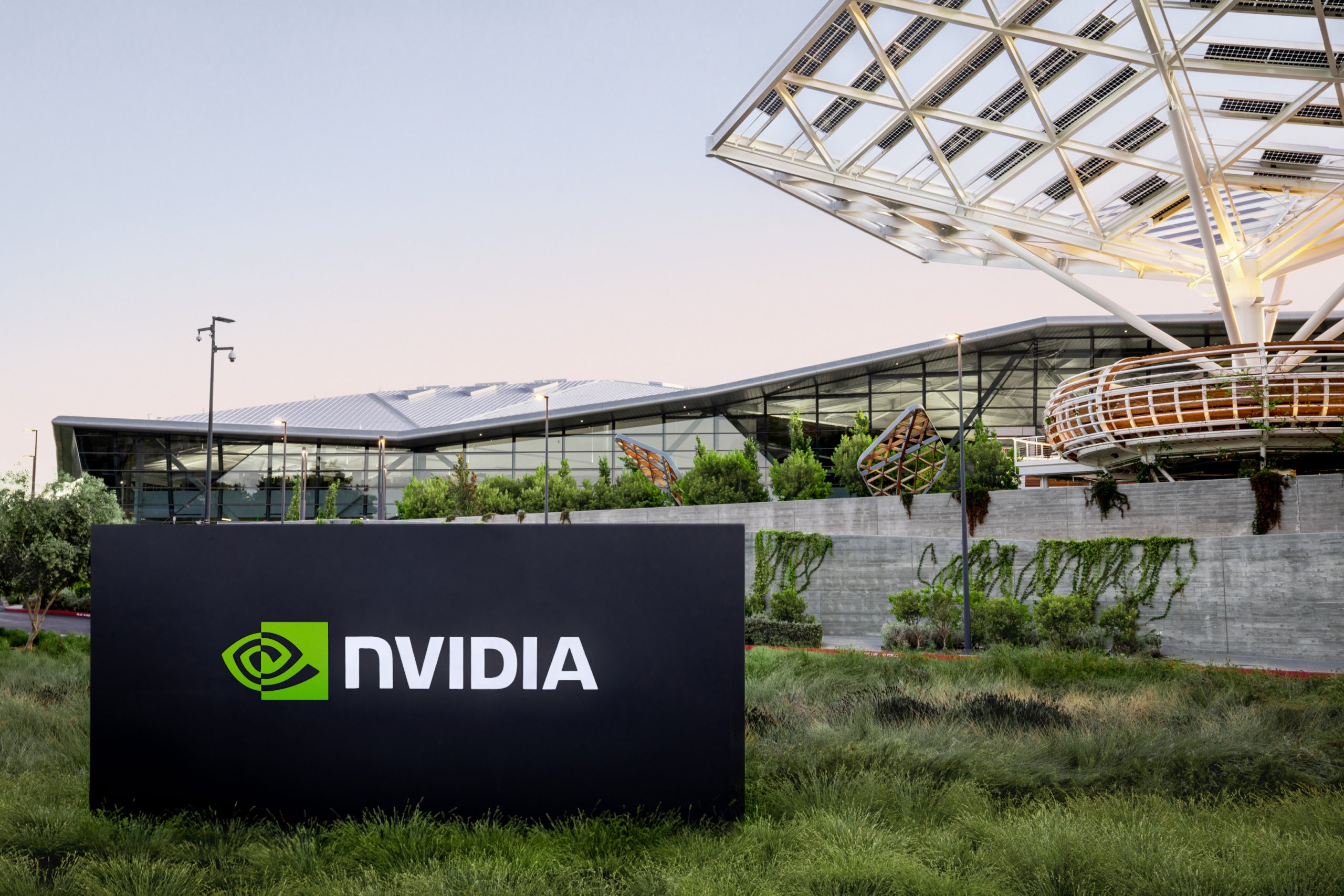
(Photo by Nvidia)
See also: NVIDIA Jetson Orin Nano 2 brings physical AI to drones and robots
Want to learn more about AI and big data from industry leaders? Check out AI & Big Data Expo taking place in Amsterdam, California, and London. The comprehensive event is part of TechEx and is co-located with other leading technology events, click here for more information.
AI News is powered by TechForge Media. Explore other upcoming enterprise technology events and webinars here.